Ensuring Performance and Uptime in MEG Regeneration
05 | 06 | 2026
7 visualizações
Introduction
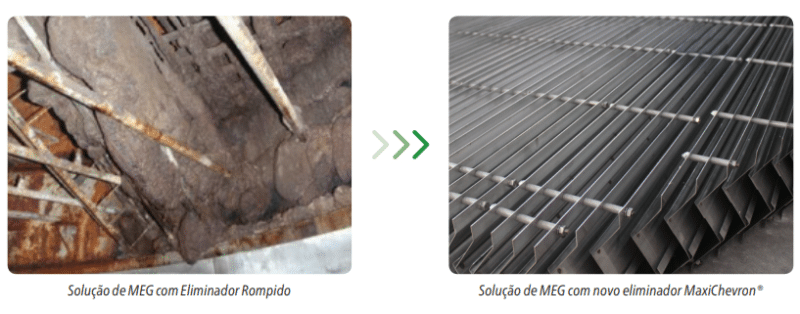
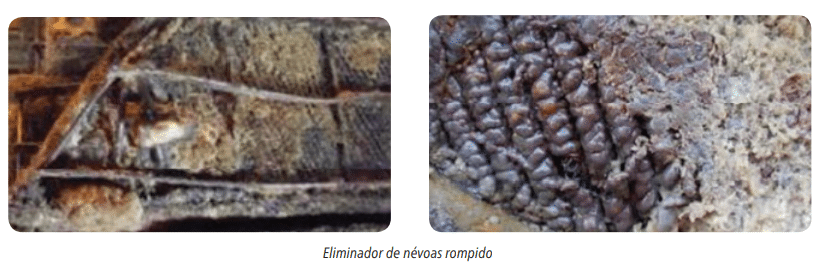
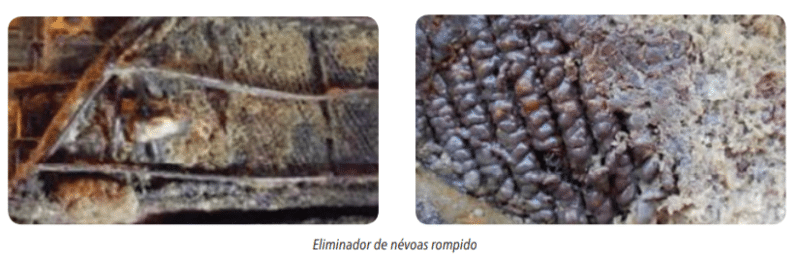
An oil and gas company contacted Clark Solutions regarding excessive fouling and ruptures in the mesh-type mist eliminators installed in the flash evaporator used for monoethylene glycol (MEG) regeneration.
MEG is used in the dehydration of natural gas, which is extracted along with oil and water. The operational issues led to at least two corrective shutdowns per year, resulting in production losses.
Analysis
Hydrates, also known as clathrates in the oil industry, are solid crystalline structures similar to ice. Their formation depends on the presence of water and natural gas.
MEG acts as an inhibitor, reducing the amount of free water in the mixture and shifting the phase equilibrium curve, which helps prevent hydrate formation.
The MEG regeneration process is critical to minimize glycol losses and avoid issues that may lead to unplanned shutdowns.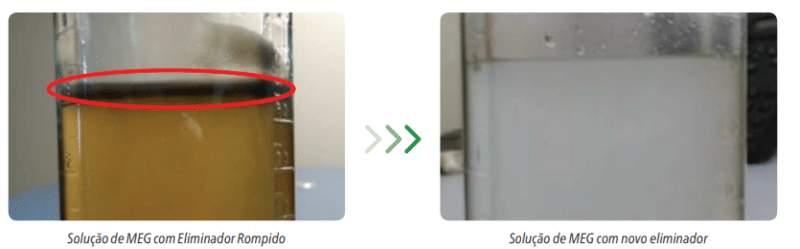
Our Solution
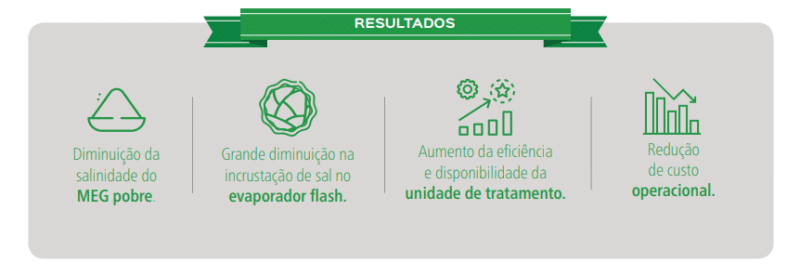
The key was to improve drainage of the accumulated liquid in the mist eliminator. Previously, retained liquid would dry within the mesh, causing deposition of dissolved substances — damaging the equipment and contaminating the MEG.
For this process, the most suitable solution was Clark Solutions’ MaxiChevron®, a robust mist eliminator designed for dirty operations. With lower interfacial area and self-draining capability, it effectively minimizes solid buildup without compromising separation efficiency.