Abreu e Lima – The First Brazilian Sulphuric Acid Plant with Acid Tanks Protected by Cathodic Protection
05 | 06 | 2026
7 visualizações
Extremely acidic or extremely alkaline environments have always been a challenge for corrosion engineering. Intermediate pHs allow the use of a wide range of plastics, metals, and synthetic materials; however, at both extremes of pH, the options generally fall on very noble and expensive materials. The options are very limited.
One of these options is cathodic protection of carbon or stainless steels.
Cathodic Protection
In cathodic protection, one or more cathodes are inserted inside the tank, mixer, heat exchanger, or process vessel and this cathode is energized. The equipment itself becomes the anode, and a current between the cathode and the anode is produced and kept constant. This current ensures the formation of a protective corrosion film on the metal surface, which becomes strongly adhered, drastically reducing the corrosion rate.
Cathodic protection is an old technology. It was developed almost 50 years ago. It has currently found important application in various industries, including sulphuric acid, soda and chlorine, pulp and paper, among others.
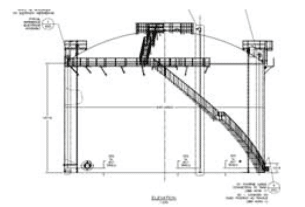
In the case of Abreu e Lima, for example, enormous acid storage tanks will be protected cathodically by the system supplied by Clark Solutions. The corrosion rates, when compared with tanks without cathodic protection, drop by more than 90%, and with that come a series of other benefits: reduction of iron content and contaminants in the acid, increased tank service life, and lower maintenance costs.
Conditions and Benefits
Even under extremely aggressive conditions, such as in the storage of acids at 93%, cathodic protection still brings enormous benefits, reducing the corrosion rate of carbon steel by more than 5 (five) times (Fig. 2).
For example, over the period of one week, the iron content in the acid stored in a tank without protection can rise from a few parts per million to values above 100 ppm, while in a tank protected cathodically this level remains virtually unchanged (Fig. 3).
Various carbon and stainless steel acid equipment can be passivated using cathodic protection techniques: shell-and-tube heat exchangers, digesters, mixers, storage tanks, among others.
If you want to learn more about cathodic protection, its uses and applications, contact Clark Solutions. We can help you choose the most suitable materials or corrosion protection techniques.